
My family : vocabulary
Utilise : MON , TON, SON, NOTRE, VOTRE, LEUR ...
Present tense : now, usually, in general
Théorie
Avec le présent on parle de :
1️⃣ Maintenant (now / right now)
2️⃣ Souvent (usually / in general)general)
On parle de maintenant (NOW)
Aujourd’hui (today)
Aujourd’hui, je travaille.
En ce moment (right now)
En ce moment, j’apprends le français.
Maintenant (now)
Je suis à la maison maintenant.
Question :
❓ Et toi ? En ce moment, tu fais quoi ?
On parle de d’habitude ( USUALLY)
Toujours (always)
Je parle toujours français.
Souvent (often)
Je vais souvent au marché.
Parfois (sometimes)
Je mange parfois au restaurant.
Jamais (never)
Je NE regarde jamais la télé.
(ajoute NE : negation)
Question :
❓ Tu fais quoi souvent en France ?
On parle de sa routine (USUALLY)
Le matin (in the morning)
Le matin, je bois du café.
Le soir (in the evening)
Le soir, je regarde Netflix.
En général (generally)
En général, je dîne à 20h.
D’habitude (usually)
D’habitude, je me lève à 7h.
Question :
❓ D’habitude, tu manges à quelle heure ?
You can put them at the beginning or after the verb.
Ne penses pas trop : parle juste 💬✨
Don’t overthink : just speak 💬✨
En pratique
✨ Little challenge !
Listen to these three sentences and try to create your own in French! 🇫🇷
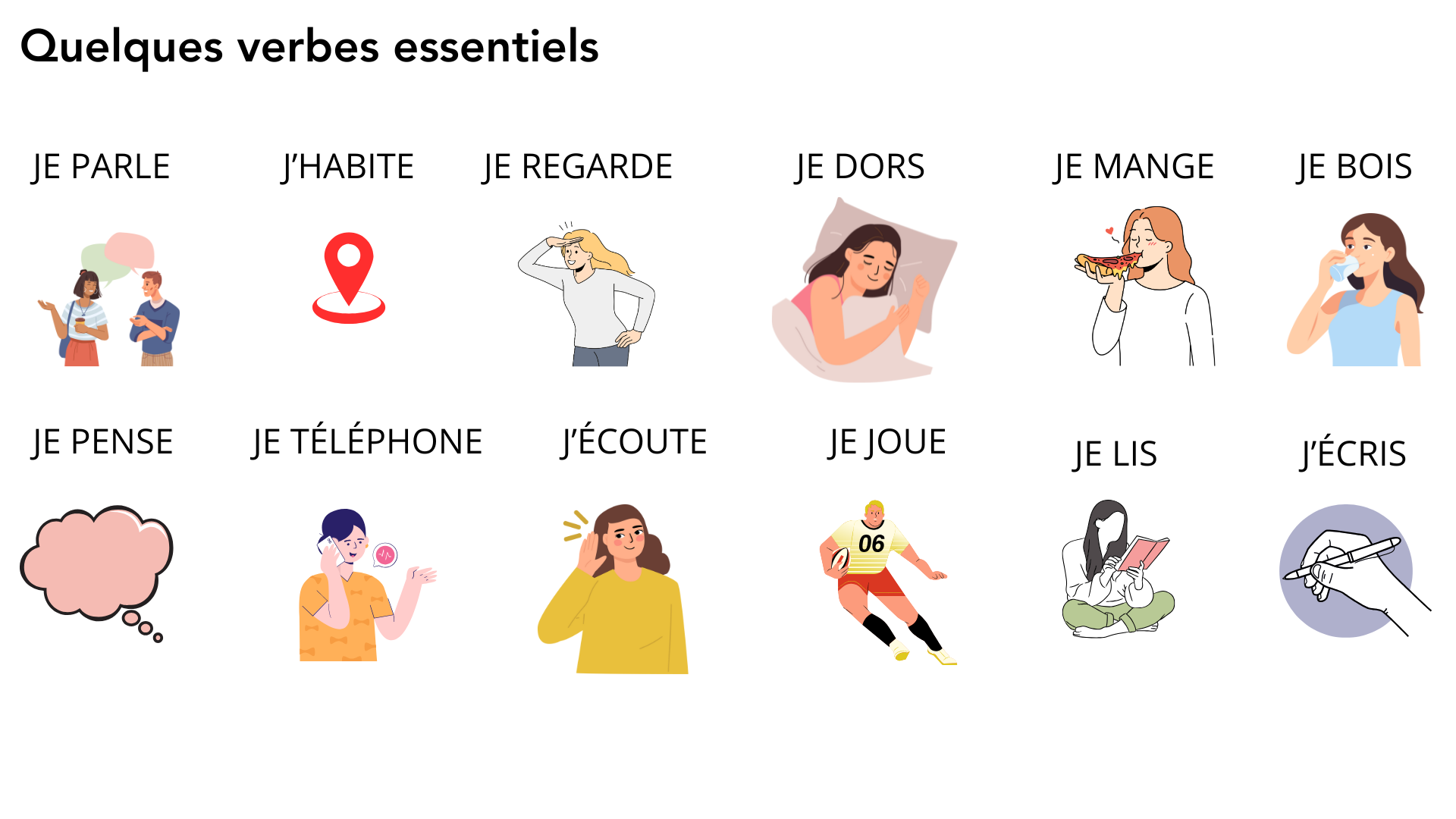
Aujourd’hui, je mange à 14h.
En général, je regarde la télé le soir.
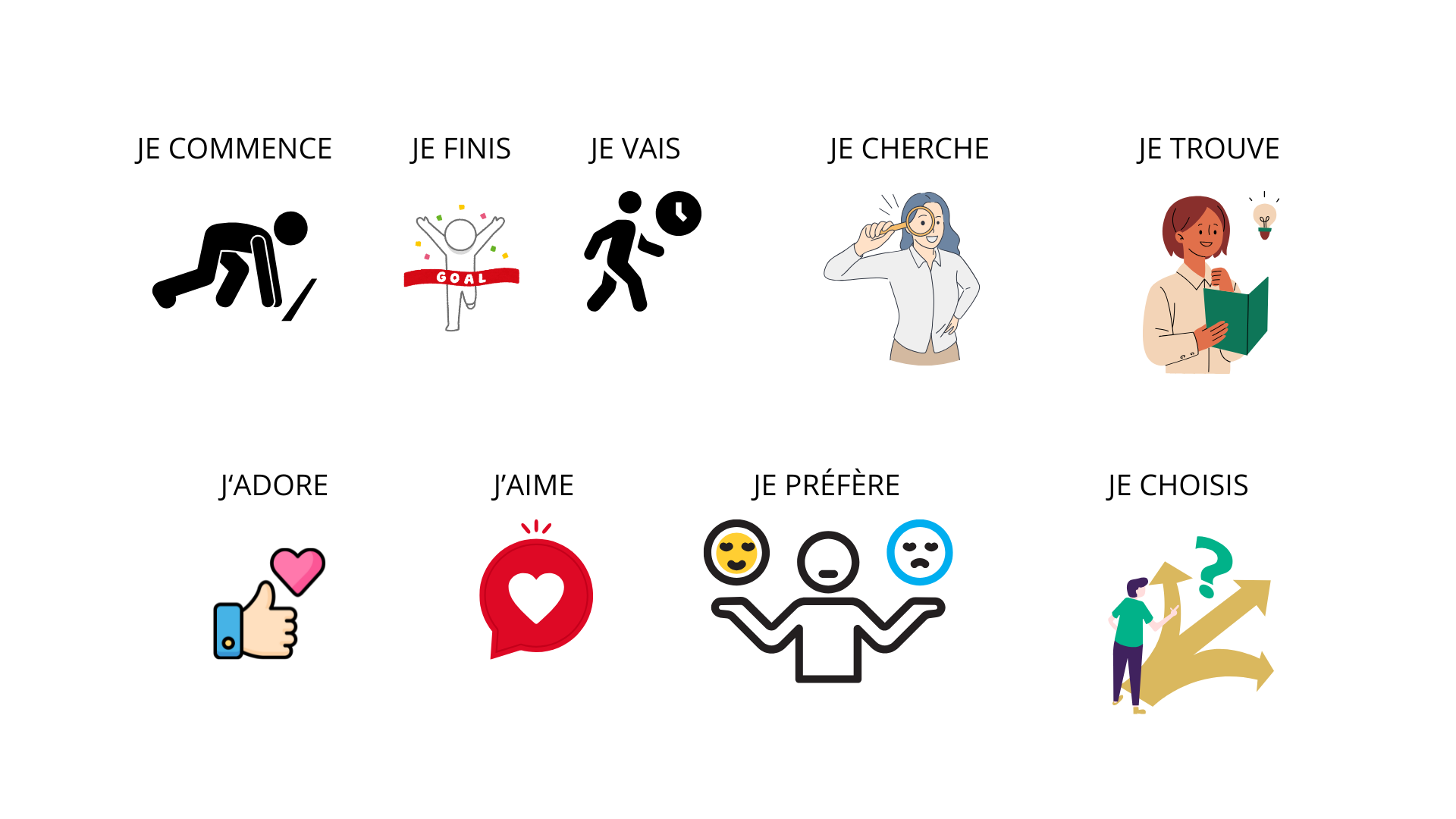
D’habitude, je commence la journée à 6h.


La négation
Encore plus de négations !
Now, let’s see other ways to say “DON’T / NOT” in French.
Just like NE…PAS, these negations also work as a “sandwich” around the verb:
1️⃣ NE…PLUS → no longer / not anymore
Je ne fume plus → I don’t smoke anymore
Tu ne regardes plus la télé → You don’t watch TV anymore
2️⃣ NE…RIEN → nothing / not anything
Je ne vois rien → I see nothing / don’t see anything
Il **n’**a rien dit → He didn’t say anything
3️⃣ NE…JAMAIS → never
Elle ne mange jamais de chocolat → She never eats chocolate
Nous ne partons jamais tard → We never leave late
💡 Spoken French tip:
Just like with NE…PAS, in conversation, people often drop the “ne”:
Je fume plus → I don’t smoke anymore
Je vois rien → I don’t see anything
Elle mange jamais de chocolat → She never eats chocolate
Administration : questions spécifiques
Écoute les 2 audios 🎧
Puis envoie-moi un WhatsApp 📱 et dis-moi, pour chaque situation : quel rendez-vous ? quel document ? et qu’est-ce qu’elle doit faire ?
Listen to the 2 audios 🎧
Then send me a WhatsApp 📱 and tell me, for each situation: what appointment? what document? and what does she need to do?
School
Nursery
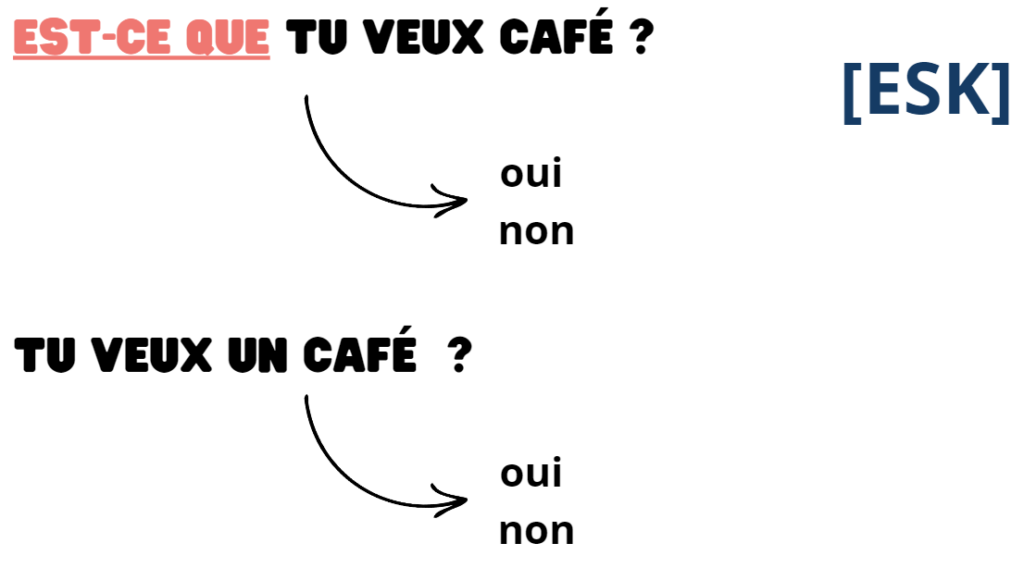
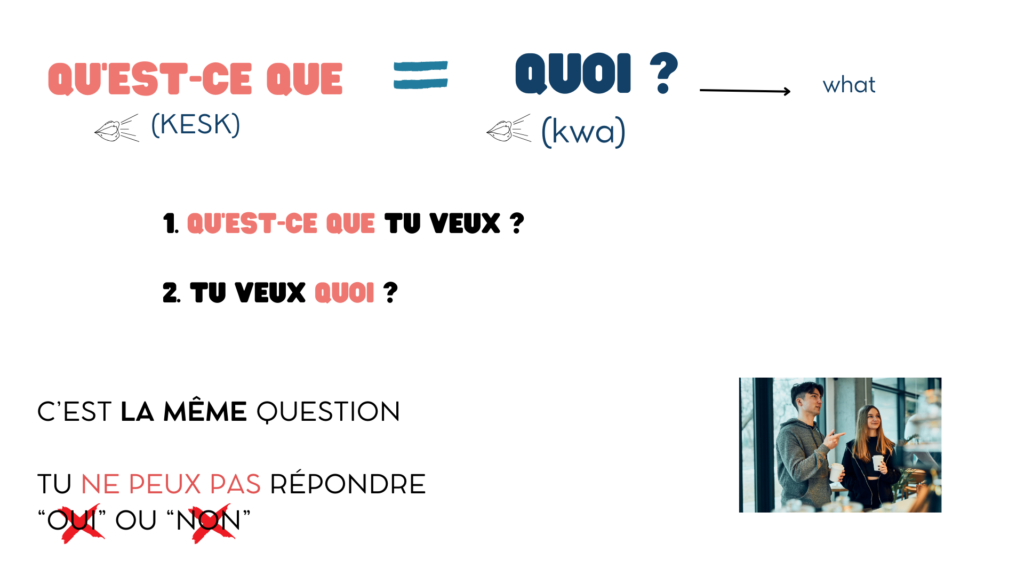
How to ask questions ?
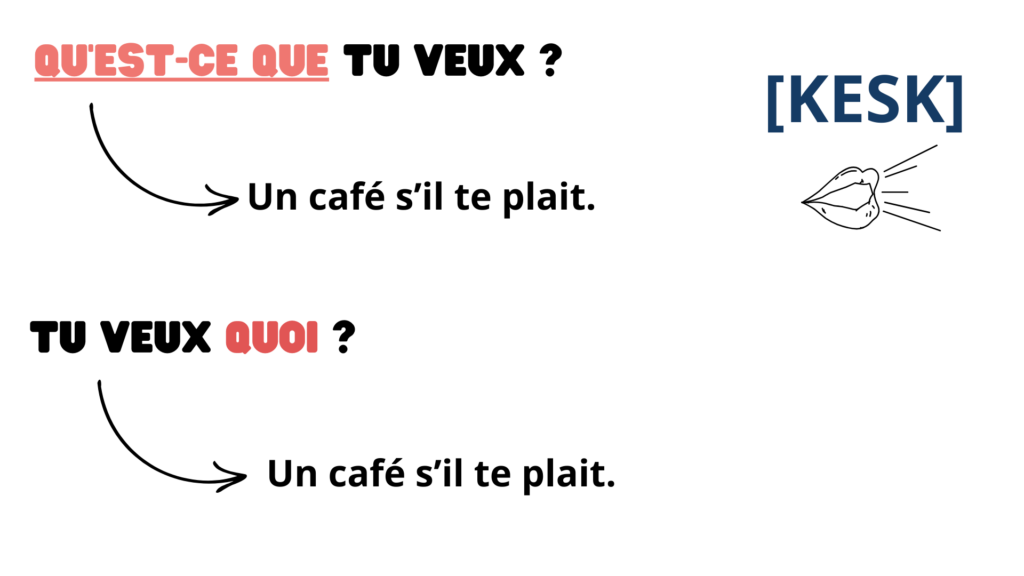
Poser des questions = Ask questions
Qui ? Quoi ? Quand ? Où ? Comment ? Pourquoi ?
Here are 6 words to get started and ask more precise questions in French.
You’ll actually discover 7 words (haha, suspense…).
I’ll let you explore! 😊
A little, a lot, more, less, enough, too much
Les petits adjectifs
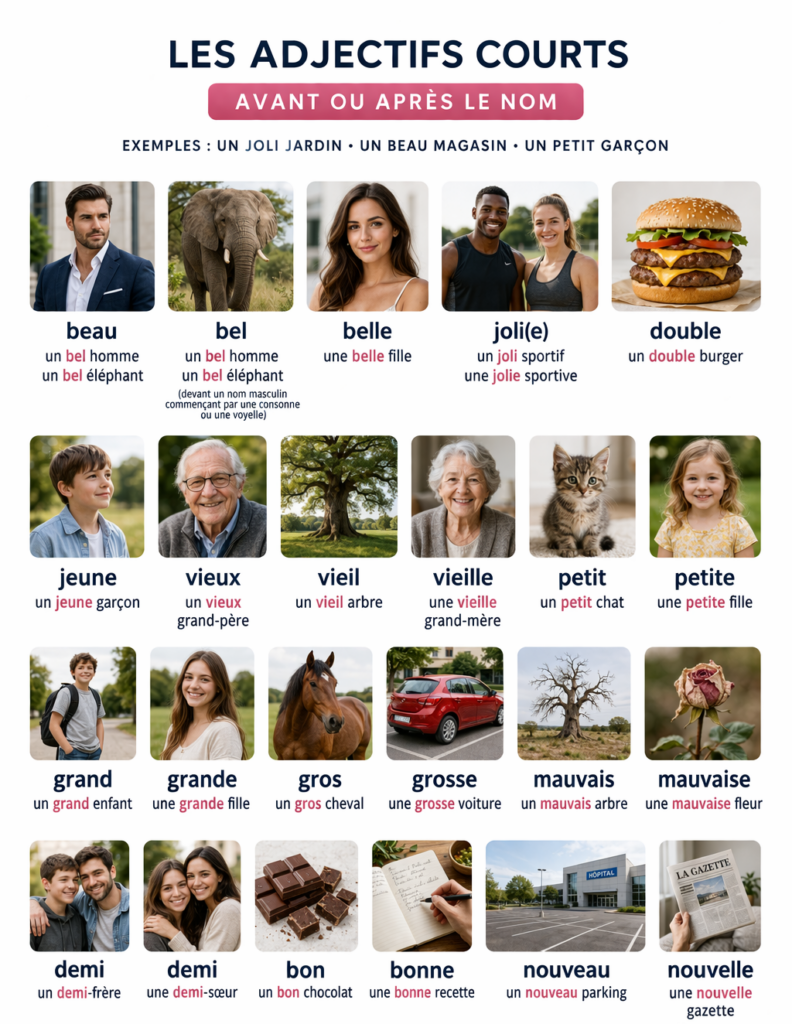
les adjectifs courts (short)
No panic,
Today, we’re going to learn about short adjectives in French : and the good news is: they’re easy and super useful in real life!
Common short adjectives below ….
✨ Simple rule:
These adjectives usually come before the noun.
Examples:
- un beau sac
- une petite maison
- un bon repas
💡 Important detail:
Some adjectives change form before a vowel or a silent “h”:
- beau → bel (un bel homme)
- nouveau → nouvel (un nouvel appartement)
- vieux → vieil (un vieil immeuble)
If the adjective is short and very common, it usually goes before the noun. Think of them as “VIP adjectives”
Don’t be afraid to use them! You hear them everywhere : in conversations, movies, and everyday life.
Start simple: describe things around you :
exemple : une jolie robe, un bon café, un grand jardin
The more you use them, the more natural it becomes !